Orkney
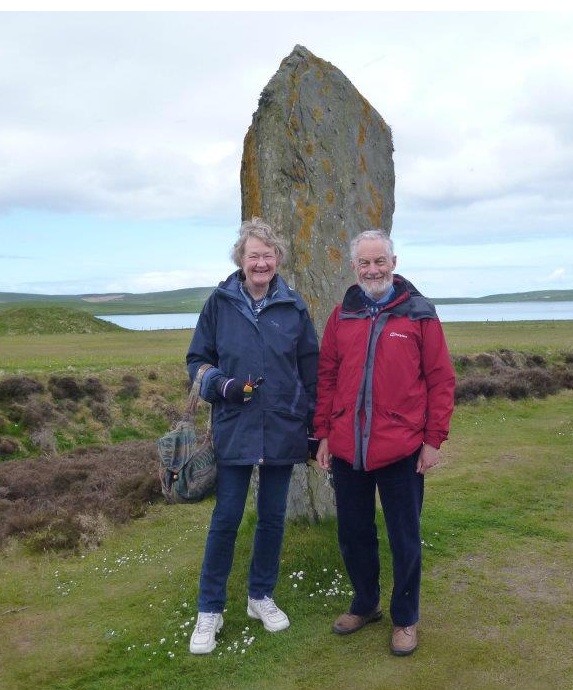
Sometimes Facebook brings up memories that strike a chord in one’s heart. The day before the anniversary of Tom’s death, the above photo appeared. It was taken a year before Tom died and, as I remembered the circumstances surrounding that holiday, I found myself filled with gratitude that we had been able to share those precious few days together.
It was a holiday booked on the spur of the moment and not without difficulty because, thanks to a music festival, all the accommodation was booked up and there were no cars to hire. It was also half-term. I had completed the massive task of compiling the timetable just days before and was looking forward to some rest when the Deputy Head called me in to say that some of the students had asked if they could change their subject choices. This would require me to almost start the timetable from scratch. I was close to tears as I asked her if that meant that I would have to spend the half-term break re-doing the timetable. She kindly said that she would give me time off after the break to do the timetable and that I should go and enjoy the holiday. When I got home that evening I announced to Tom that I was going to go away and the furthest I could think of was Orkney. Dear Tom – he was about to go off on a walking holiday with his mountaineering group – but he asked “Don’t you want me to come with you?” We agreed that he would go with his friends for the weekend while I attempted the bookings. We flew to Kirkwall on the Monday. The wonderful people of Orkney could not have tried harder to help us. I managed to book a B&B for the first few nights. The owner met us at the airport, drove us to Stromness where he had arranged a car hire for us. He then led the way to his home. We had to move to a second B&B for the rest of our stay and that owner very kindly offered to drive us to the airport when we left.
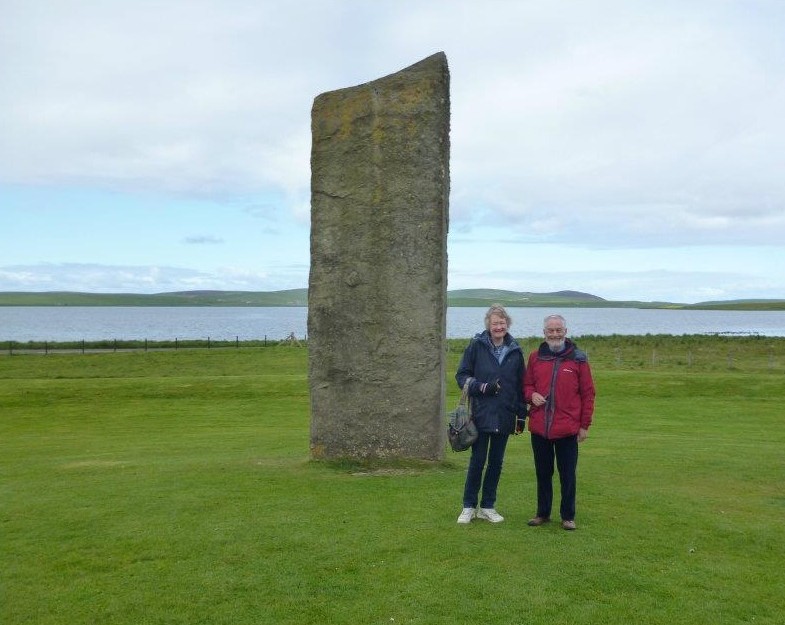
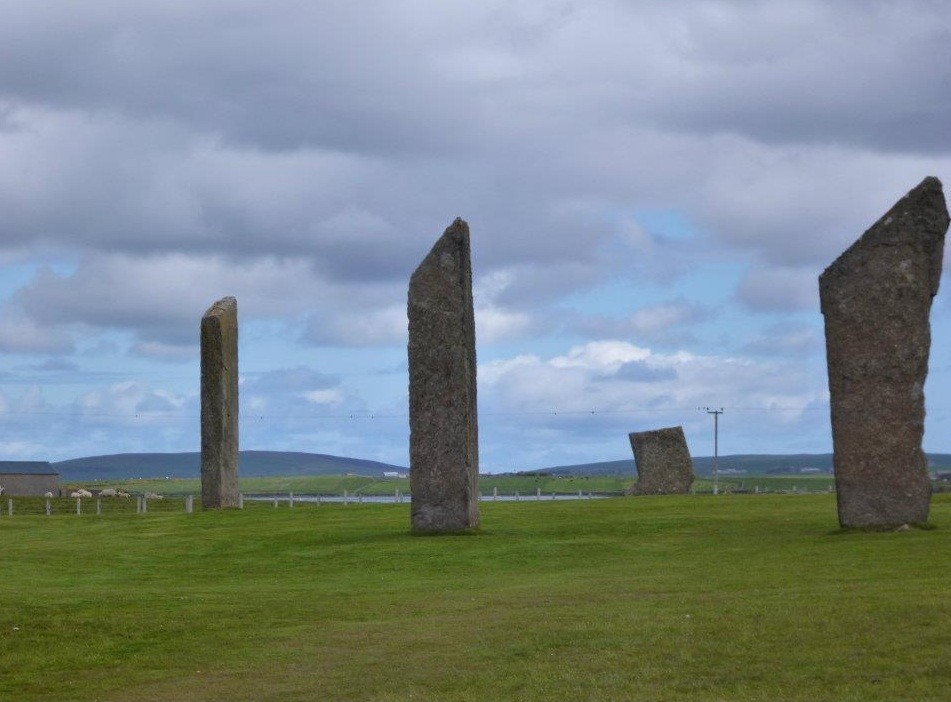
We loved every minute of our short stay, mostly visiting the ancient sites, dating from the third millennia BC. Tom was keen on archaeology and was fascinated by the burial chambers. We saw several, but the highlights were Maeshowe and the Tomb of the Eagles. The village of Skara Brae and the Broch of Gurness were equally interesting. For me, the Standing Stones of Stennes and the Ring of Brodgar were the most meaningful. It was here, hugging a stone, that I could feel lost in the timelessness of humanity. The days allotted to us are so short in comparison to the millennia that the stones have been standing. It put my silly timetable into perspective!
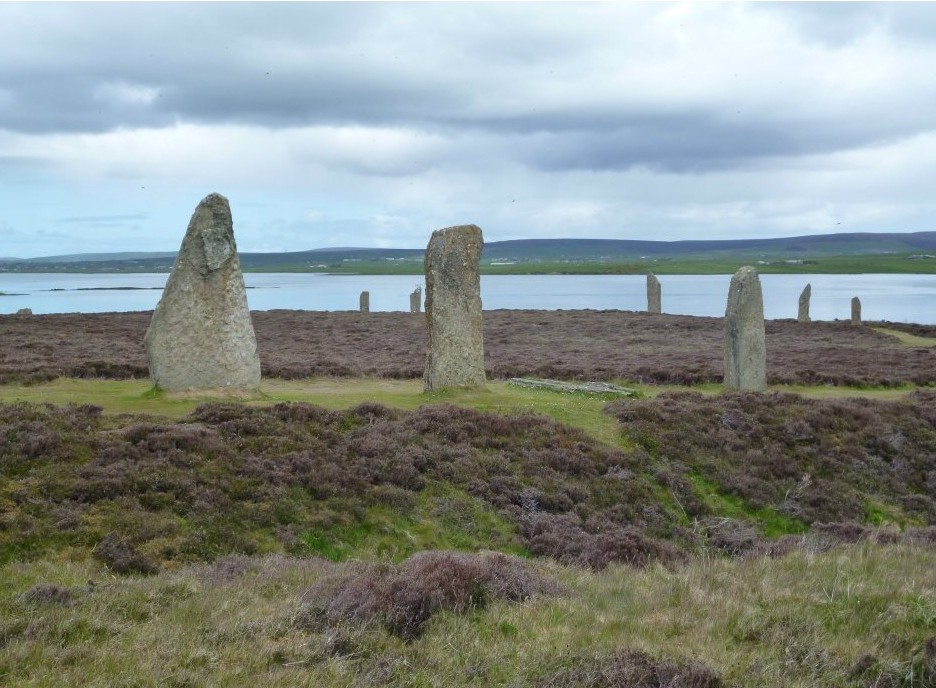
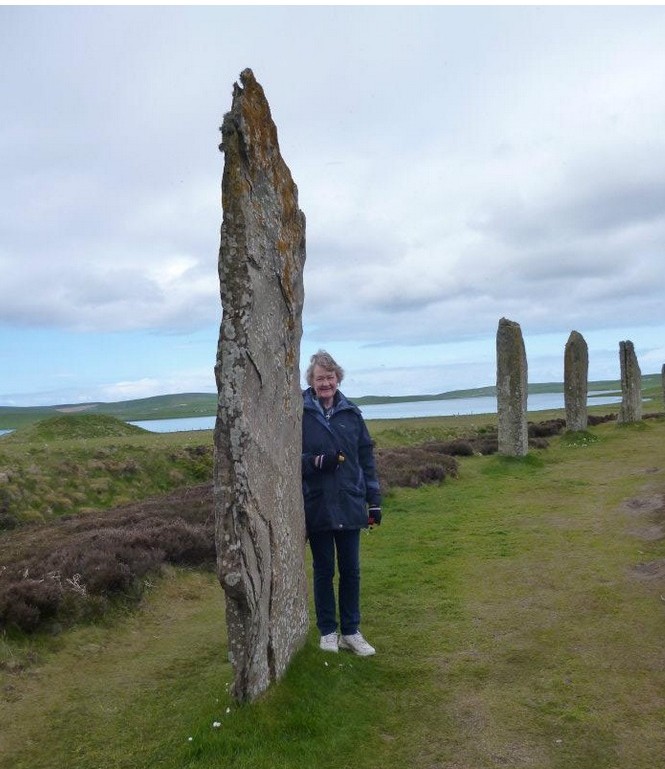
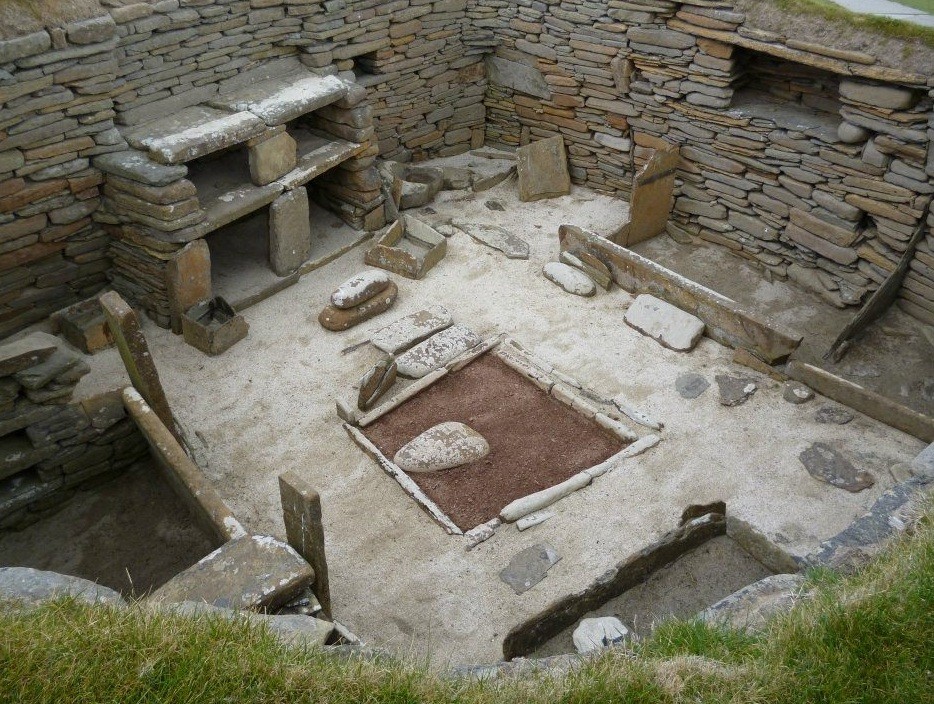
The architect, Juhani Pallasmaa, wrote in an essay: “we have a mental need to experience that we are rooted in the continuity of time. We do not only inhabit space, we also dwell in time.”
In Dwellings: A Spiritual History of the Living World, Linda Hogan describes walking through a redwood forest, aware of her surroundings, when she says “Suddenly all my ancestors are behind me. Be still, they say. Watch and listen. You are the result of the love of thousands.”
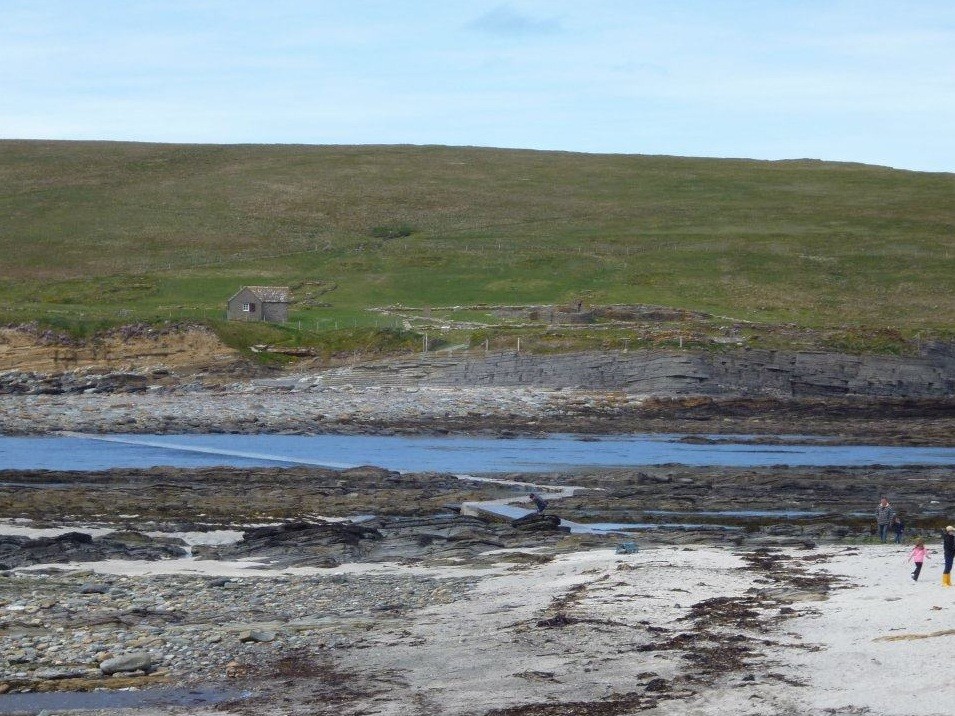
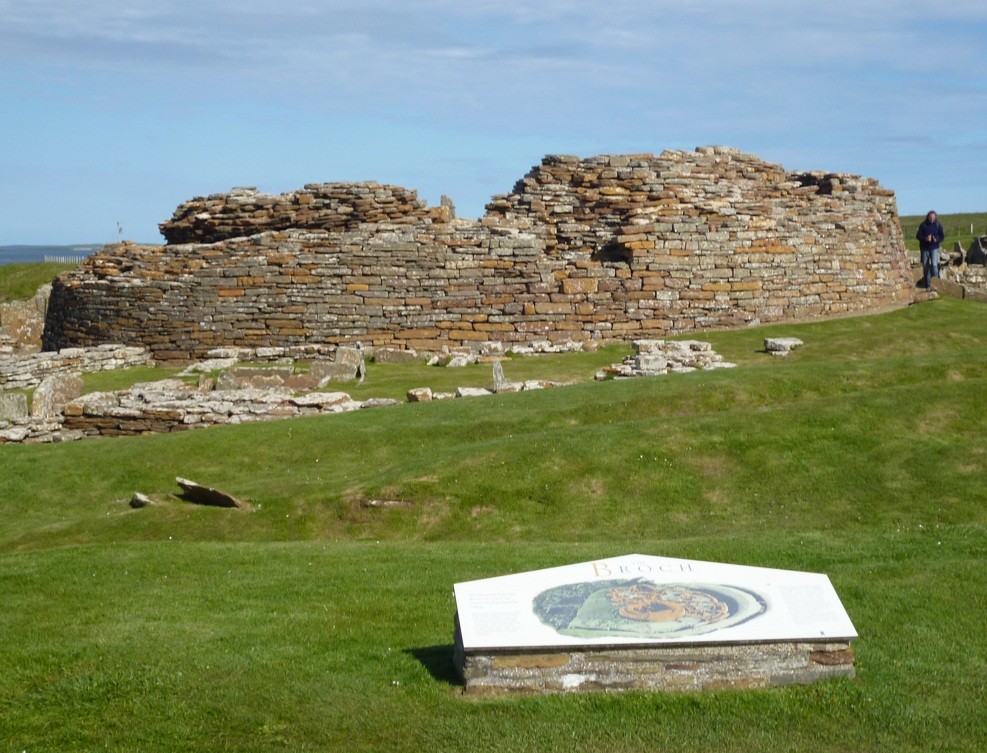
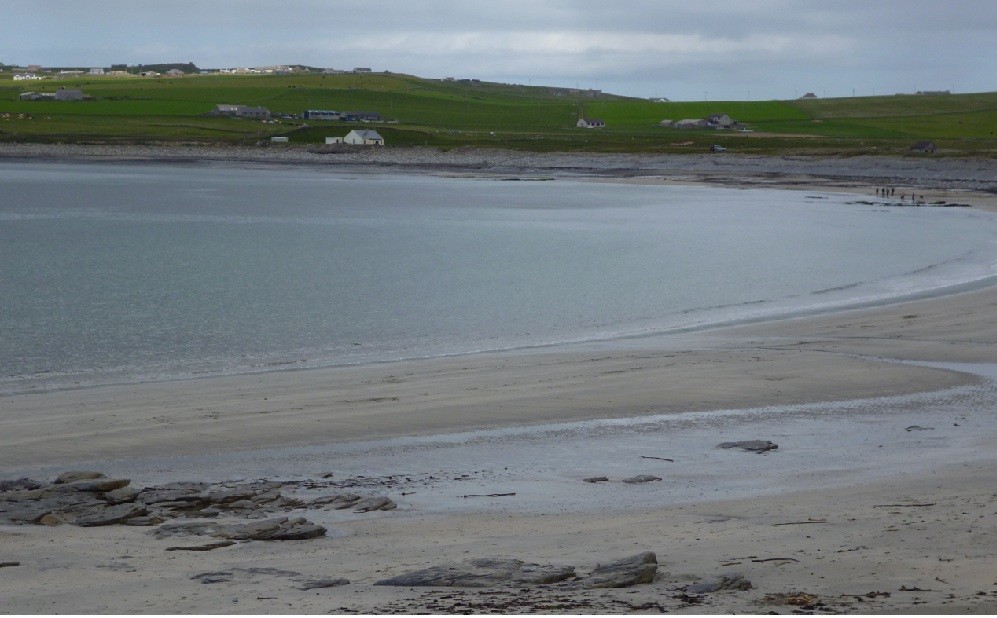
At the north-west tip of Orkney mainland, there is a small tidal islet, accessible on foot at low water only, on which there is an assemblage or ruins. Most are Norse but some date from the pre-Norse Pistish period. The Norse ruins on the brough include those of Earl Thorfinn’s palace as well his Great Christ Church, a Viking-age boat slip and the remains of monastic buildings.
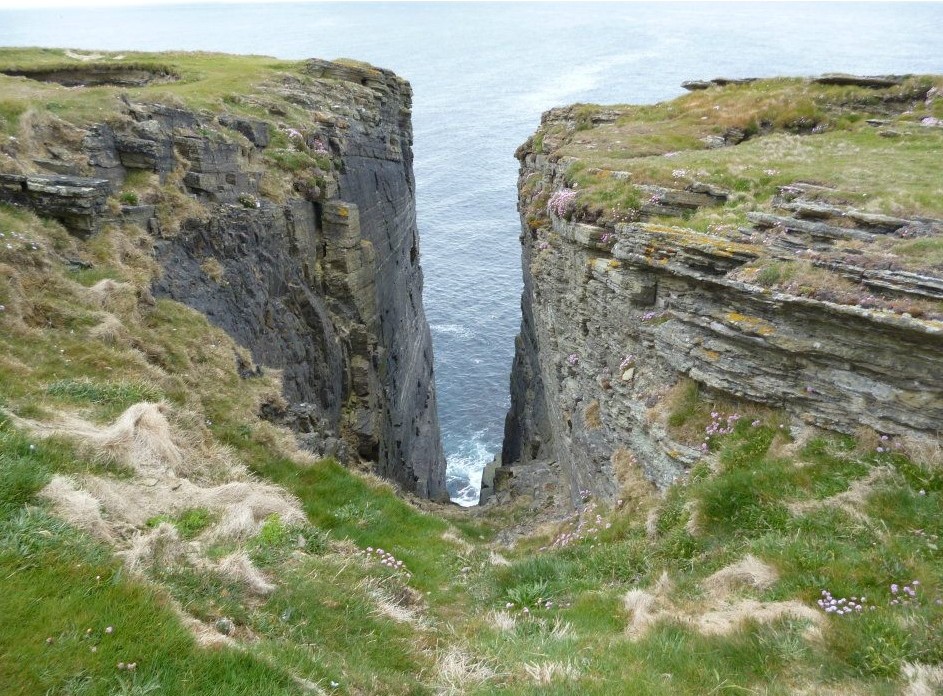
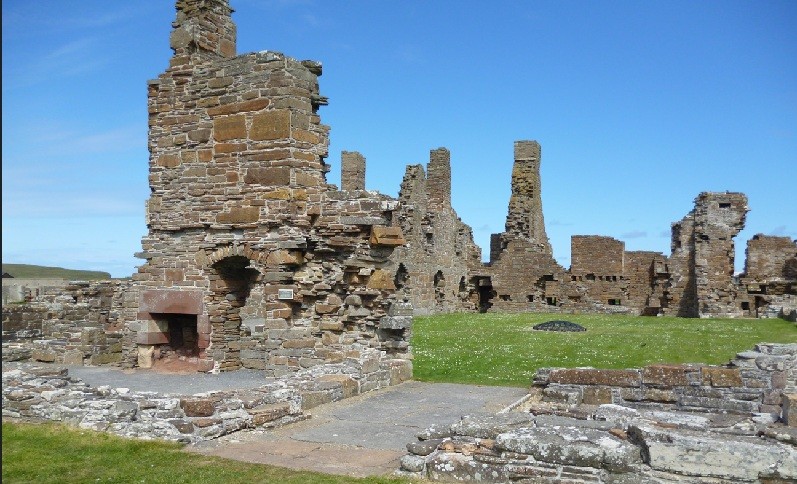
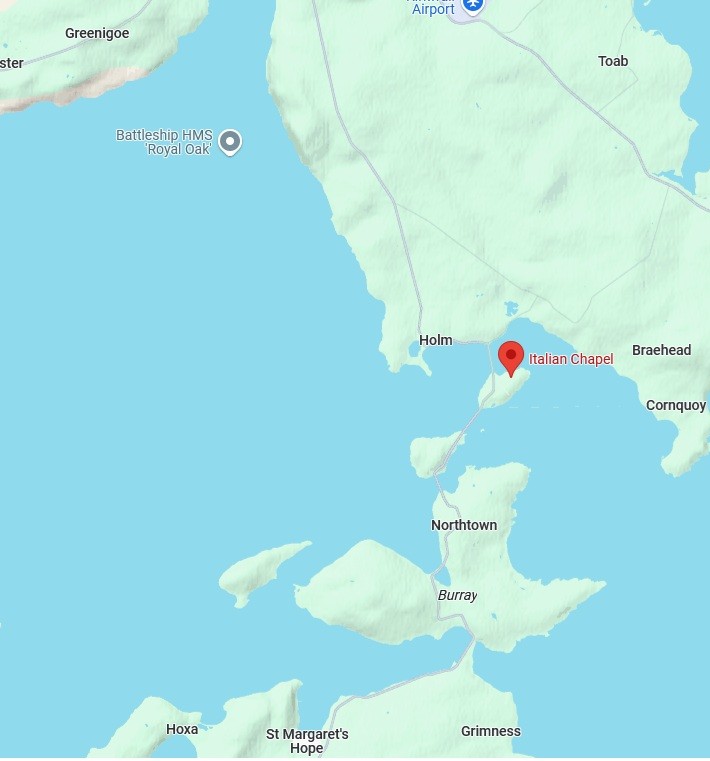
However, we did not only dwell on the ancient and more recent past, but also explored the towns of Kirkwall with its St Magnus’ Cathedral and Stromness with its harbour. A particularly interesting trip was the one we made to the Italian Chapel on the islet of Lamb Holm.
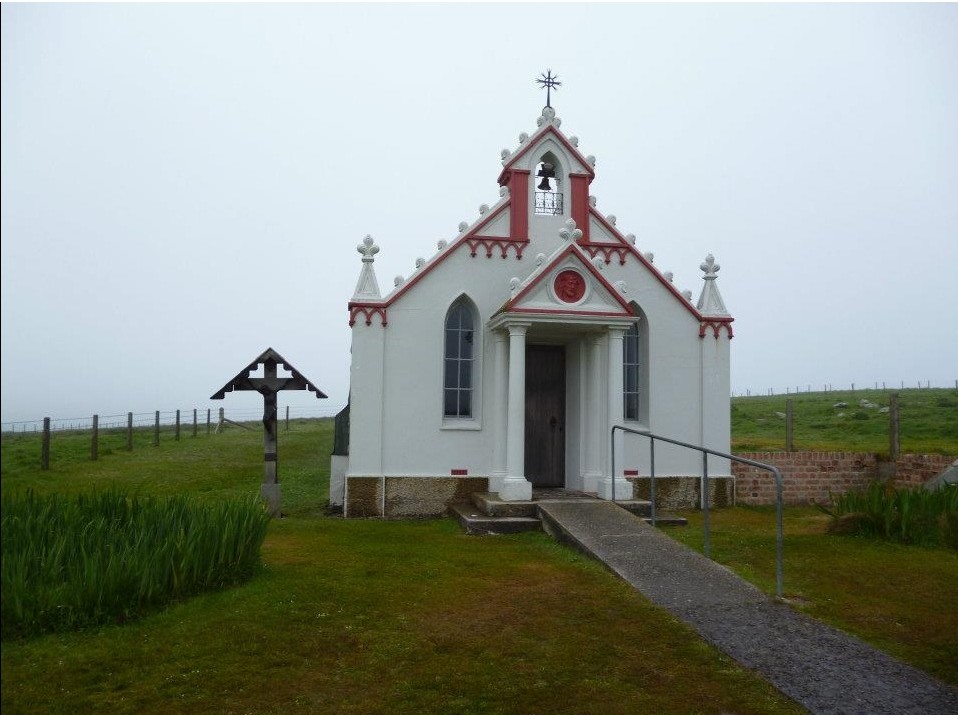
In October 1939 a German submarine entered Scapa Flow and sank the British battleship ‘HMS Royal Oak’ with the loss of 834 lives. Winston Churchill, at that time First Sea Lord, visited Orkney and the decision was taken to construct causeways (called the Churchill barriers) between the islands to make the base for the home fleet more secure.
A shortage of manpower to construct the barriers coincided with the capture of thousands of Italian soldiers fighting in North Africa, so a decision was taken to transport 550 men to Orkney to do the manual labour.
Following a request from the camp priest, Fr Giacobazzi, it was agreed that two Nissen huts would be joined together to provide a chapel. Among the Italians was an artist, Domenico Chiocchetti, and he was given the task of transforming the two Nissen huts into a chapel. He was assisted by other tradesmen – in particular Giuseppe Palumbi, a blacksmith, and Domenico Buttapasta, a cement worker.
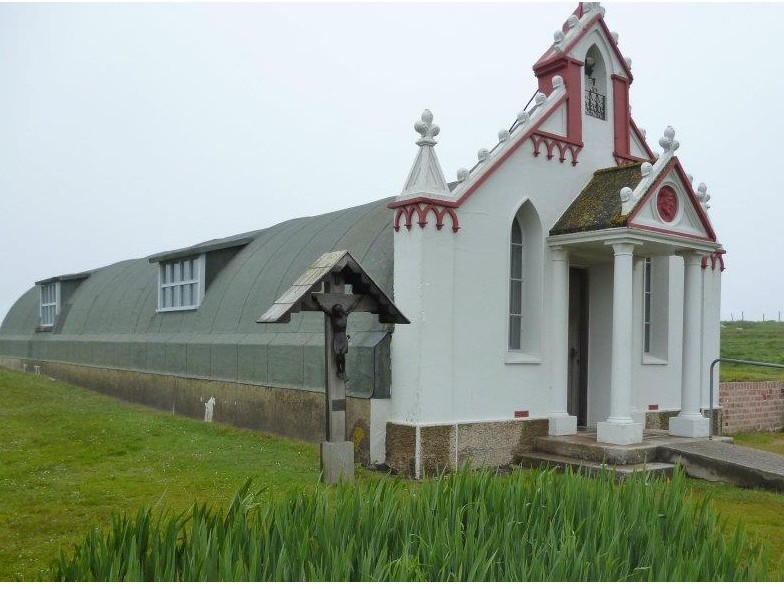
Domenico Chiocchetti carried in his pocket a small prayer card given to him by his mother before he left his home in Italy, and Chiocchetti based his painting above the altar in the Chapel on the image on that card of the Madonna and Child. When the Camp Commander, Major Buckland, realised that the prisoner was a very talented artist he was allowed to continue painting to make the building more attractive.
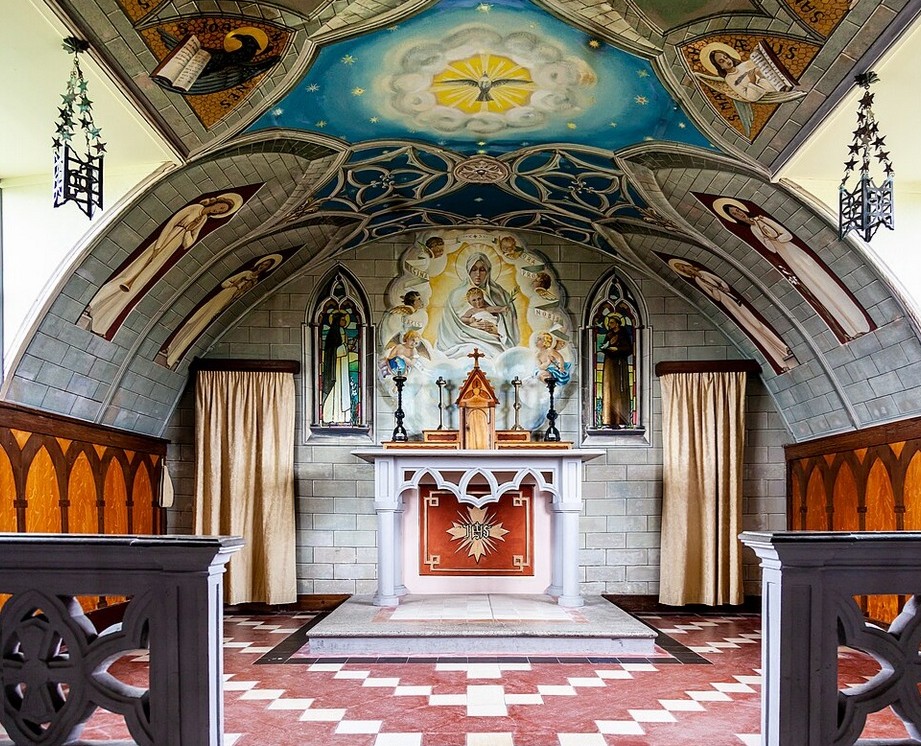
Chiocchetti was also responsible for the construction of the sculpture of St George slaying the dragon. It was intended as a symbol of hope – a concrete representation of the desire to end all wars, wars that cause pain and injustice to so many people. This detailed work of art is impressive in its own right, however its creation from scrap barbed wire and cement, along with its story as a symbol of hope, make it all the more remarkable. The statue preceded the chapel and it helped to pave the way for the ornate sanctuary by strengthening the relationship between the prisoners and the camp commander, Major Buckland.
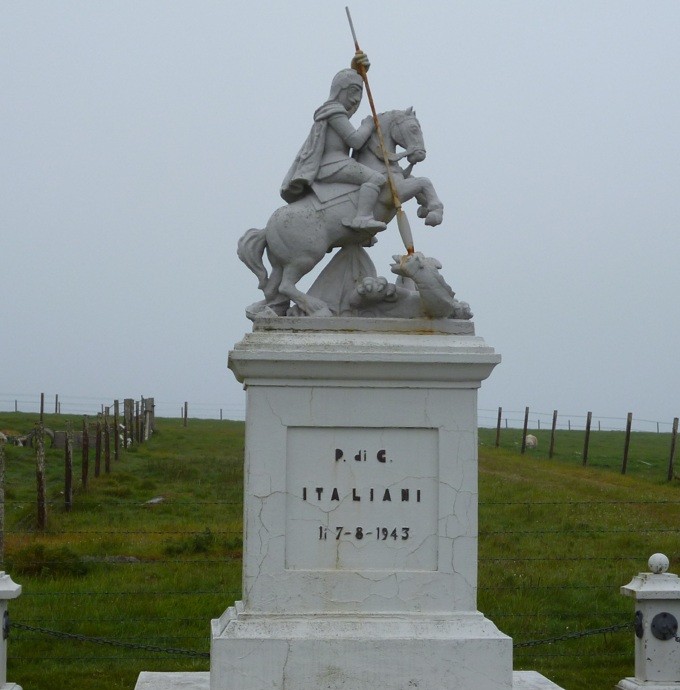
The statute and the chapel are all that remain of the prisoner-of-war camps. Maybe a reminder that beauty can come out of tragedy.
What did I learn from this short holiday?
- Make happy memories while you can.
- Accept that, although our sojourn on this earth is fleeting, we are part of something greater than us. When we gaze into eternity, all our troubles seem transient.
- Look for beauty in unexpected places.
- Find hope in the midst of despair.


What a lovely, heart-warming story, Marlene. You express yourself so well. I am always fascinated by standing stones. Touching them is like going through a tunnel of time.
Such a lovely and interesting blog, Marlene. A wonderful memory of Tom, too. There is lot of truth in the saying that love is spelt T-I-M-E and his willingness to give time when you were feeling like that is to be treasured.
I am also often fascinated by our individual space/time positioning as in the quote you referred to. In my mind I have been calling it where each of our geography and history meets and wondering at those who are alongside us for longer or shorter stages of our journey.
Beautifully written. It feels like I was on the journey with you.